OK. It’s a sinful, soulful food,
paté is, and it’s not on my eating plan, as it tends to be high in fat and cholesterol, and as I have a tendency to eat an awful lot of it. But it is on
Charcutepalooza, so I welcomed the excuse to break with said eating plan. I’ll repent by swimming extra laps and eating a slew of seaweed salad!
Though it can be extravagant, as it is when made with foie gras, it can also be humble, as when made from scraps of leftover this and that. I always like the idea of making something with whatever you happen to have (that’s the "how we live our lives" part), so I dug into the freezer to see what I could find. No pork liver - how ever could I have let
that happen? - but there was some chicken and duck liver that would do. No pork pieces, but there was bag of fat scraps cut from various pieces of pork. There were also a few pieces of veal in there, but I’m not about to give them up when the season for Veal Stew with Lemon and Cream (also not really on my eating plan either – more laps and seaweed for me!) is just around the corner. I did find a little bit of ground veal left from something or other that would do instead. Though I’m sure some would say that to make a proper
paté I should grind it all from the start, I’m also sure that there have been plenty a fine
paté made from pre-ground meat, back in some other day before there was a Kitchen Aid mixer with grinder attachment in every kitchen
In this recipe, I use the aspic and the crust from a recipe for
Raised Pork Pie, posted on food52 by luvcookbooks. It is simple yet rich and flavorful, and one of my favorite recipes I’ve tried from the site.
The center of the paté has a layer of sliced duck liver on top of a layer of pork confit. Now confit isn’t necessary for the paté, and it may even be overkill. You could certainly just layer small pieces of raw meat into your paté, grind it in with the veal, or even leave it out altogether. But for this paté, I liked the way the confit blended in seamlessly, soft enough to slice through and spread, but still retaining its character.
Small Paté en Croute, with Chicken Livers, Duck Livers and Pork Confit
Makes about 1 ½ c paté for 1 c in pastry for the day after tomorrow, and about ½ c plain paté for supper tomorrow.
This paté en croute is a three to four day recipe. On day one you start the broth, render fat for the crust, and glean bits of pork from that fat, and then bake it for the confit. On day two you reduce the stock further, creating aspic, chill it again, and you also make, bake, and chill the paté. On day three you pour aspic into the paté, chill it again so that the aspic can firm up, and finally at the end of day three or on day four you may slice it up and at last enjoy it. That’s why it’s nice to have a little plain paté to whet your appetite in the meanwhile.
Get started on some pork broth for aspic: You’ll only need about ½ to 1 c for the
paté, but make a good sized batch so that you have lots left over-you can freeze it to have around to add amazing flavor to beans, vegetables, soups, etc. Take a few
pork bones, with some meat still on them, place in a large pot and cover with
water. Add an
onion, cut in quarters, and bring to a simmer. For the Raised Pork Pie, luvcookbooks has you add a carrot stalk, a bay leaf, and some thyme, oregano, and peppercorns, and you can do this too, but for pate I prefer the aspic made with just an onion. Turn heat as low as you can get it so that it continues to release steam, but is not bubbling away. Cook the broth like this for several hours, until reduced by 2/3, every once in a while skimming off any gunk that comes to the surface. Remove bones, strain and chill broth.
Render some pork fat: put a few pieces of
pork fat (about 6 or 8 oz.) into a small saucepan with and add cool
water just to the top of the fat. Put the heat on very low and cook uncovered for a few hours until the fat comes apart and becomes mostly liquid. Remove any still solid pieces of fat, and at this point, if you’re a sloppy butcher as I am, you’ll be able to poke through the fat and the pot and pull out any little pieces of meat that were left on the fat. Strain and chill the pan liquids. When chilled, remove the fat and ad any liquid at the bottom to your pork broth. (Alternatively, use
purchased lard for the crust and a few small pieces
fresh pork – butt or fatty chop- for the confit).
Make the confit: if you’re using meat and fat from the rendering process, put the meat scraps and fat solids in a ramekin with a bay leaf. Place in a baking dish filled with water to halfway up the side of ramekin, cover with foil and bake in a 300 oven for an hour or so. If you’re using fresh fat and meat bake for two or three hours, until it is super soft and pulls apart with just a fork. When it’s cooked and still warm, spread some of it onto a piece of bread or cracker, sprinkle with salt, and eat it right then and there, standing barefoot in your kitchen. Chill the rest.
Get ready for making paté: freeze your grinder or food processor components, discs, blades, and bowls.
Reduce Broth, Making an Aspic: remove pork broth from refrigerator and remove fat. Return to large pot and simmer, continuing to skim until it is reduced to just a few cups of liquid. It should be slightly thick. Strain again and refrigerate. It should firm up to a jell, but if it doesn’t, just blend in 2 tsp plain gelatin dissolved in ¼ c water.
Make Paté: First, in a small bowl, marinate 6 oz
veal cut into 1” pieces and 1 oz
pork backfat cut into 1” pieces (or 6 oz
ground veal and 1 oz minced
pork backfat) with 1T
Cognac. In another small bowl, combine 3 oz
chicken livers, 1 minced
shallot and 2 T
Cognac. Refrigerate veal mixture and liver mixture for at least an hour.
Make a panade by heating in a small pan 1 ½ T
rendered pork fat with 1 ½ T
water. When it is melted together, add 3 or 4 T
flour (fine or cake flour is best, but regular flour is fine too) and stir, over low heat, for a few minutes until it comes together in a ball. Keep at room temperature until ready to use.
Saute marinated chicken livers and their liquid in 1T
butter just until they are browned slightly on the outside, but so they’re still squishy soft to the touch. Add another tablespoon or two of
Cognac, ignite, and let flame burn out. Cool to room temperature. Mix up the pate. If you’re using
chunks of meat and fat, run it through your grinder, along with the
chicken livers and panade, using a medium or large disc, one pass if you want a coarse pate, two if you would like it smoother. If you don’t have a grinder, you can pulse it all in your food processor, but don’t turn it to a paste. If you're using pre-ground meat you could either run it through the grinder, pulse it in the processor, or mix it up by hand, take your pick. Mix in ½ tsp
salt, ¼ tsp
Espices Fines (Spice Parisienne)* or
allspice, 2 T
cream and a pinch of
pink preserving salt (not necessary if you don’t have it, but it will help to keep your
paté a nice pink color when cooked). Fry up a little piece, taste, and adjust seasonings. Slice 6 oz
duck or chicken liver lengthwise.
*To make Espices Fines (Spice Parisienne)*, which is much preferable to allspice, mix a teaspoon each minced bay leaves, white pepper, black pepper, nutmeg, cinnamon, ginger and mace with ½ teaspoon each ground cloves, minced sage, marjoram and rosemary.
Make Crust: heat 1/4 c rendered pork fat or lard and ¼ c water. Add ¾ tsp salt and then stir in 1 to 1 ¼ c flour. Stir until just combined. No need to chill this dough; you can roll this out right away. I roll it between layers of plastic wrap.
Assemble and Bake Paté: preheat oven to 300. Line a 1 c ramekin, tin, or pate form with foil or plastic wrap, (optional, but helpful if you want to remove it from the ramekin to serve it), and then roll out crust, and line pan with the crust, reserving a piece of crust for the top. Next, line the crust with a layer of very thinly sliced pork backfat. Put down a layer with about a half a cup of the veal and liver mixture. Cover with a layer of pork confit, and “paste” it down with a teaspoon or two more of the veal and liver.
Cover evenly with a layer of sliced duck or chicken liver, sprinkle with salt, and finish with another half cup or so of the veal and liver mixture, followed by another layer of thinly sliced fat. Top with a few
bay leaves if you like, fresh are better if you have them, and cover with top crust.
Cut a 1” hole in the top crust and remove. Cover loosely with foil and place in a baking pan. Place in preheated oven and fill pan with water to halfway up the
paté pan. You can also make it free-form on a cookie sheet, wrapping the pate like a present, covering loosely with foil, and baking without water.
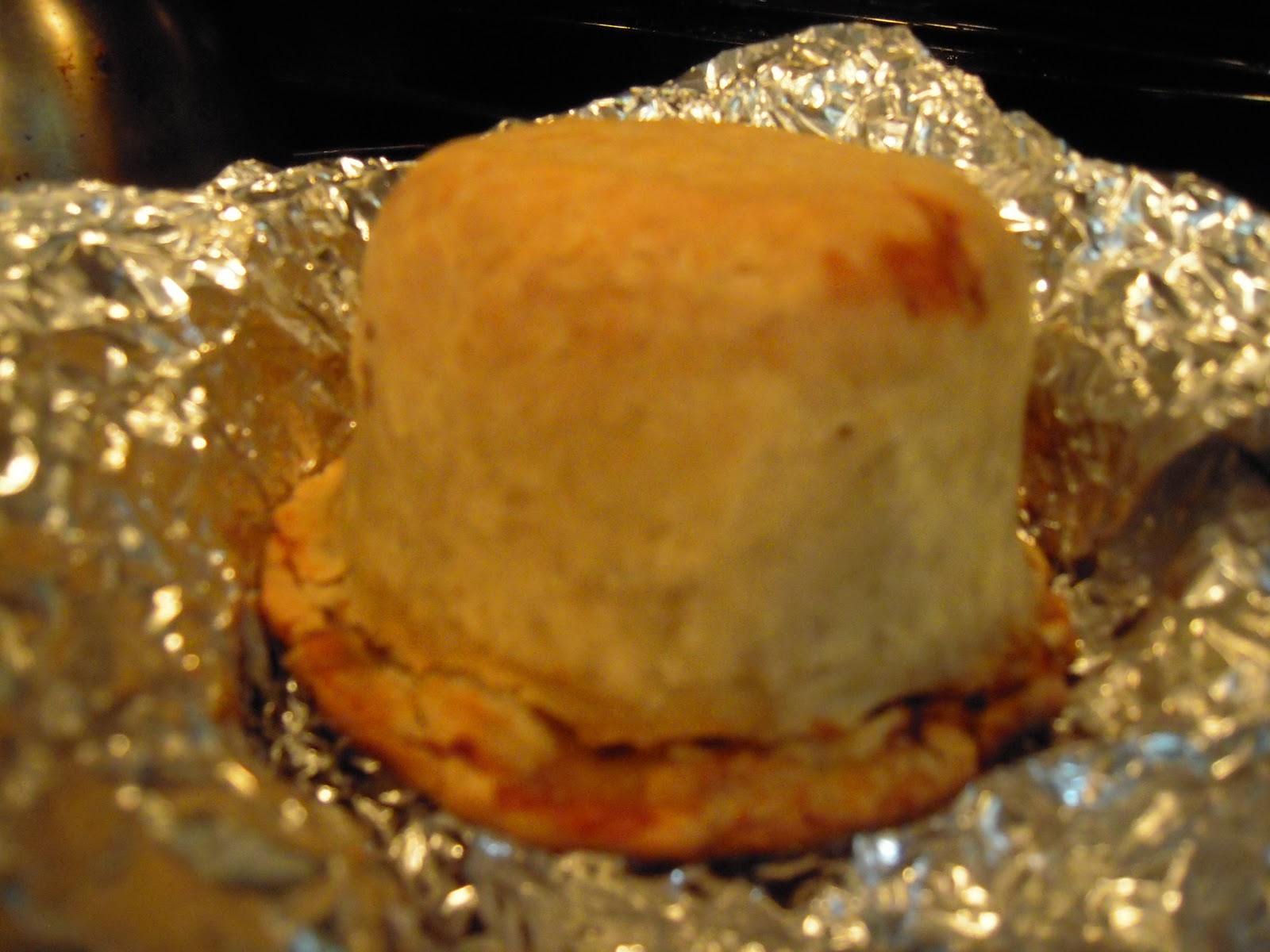
Bake for about an hour, remove foil, brush crust with beaten egg, and bake another 30-40 minutes until browned nicely.
Remove from oven, let cool to room temperature, and then refrigerate.
If you’ve got leftover ground meat mixture and sliced liver, grease a small ramekin, fill with veal and chicken liver mixture, and top with sliced liver. Brush with some rendered pork fat or oil, sprinkle with salt, and bake in 300 oven for 30 or 40 minutes. You can eat this right away, warm or cold.
Day Three:
Fill Pate with Aspic: Warm a cup of the jelled broth and put it in a pitcher with a good pour spout. Pour a bit of the broth into the pate through the cut hole in the top crust till it fills to the top. Wait a few minutes until it has absorbed, and fill again. Continue this many times, until the broth is no longer absorbed into the
paté. Chill thoroughly, at least several hours, so that the aspic can jell. Slice and serve with some sort of pickle.
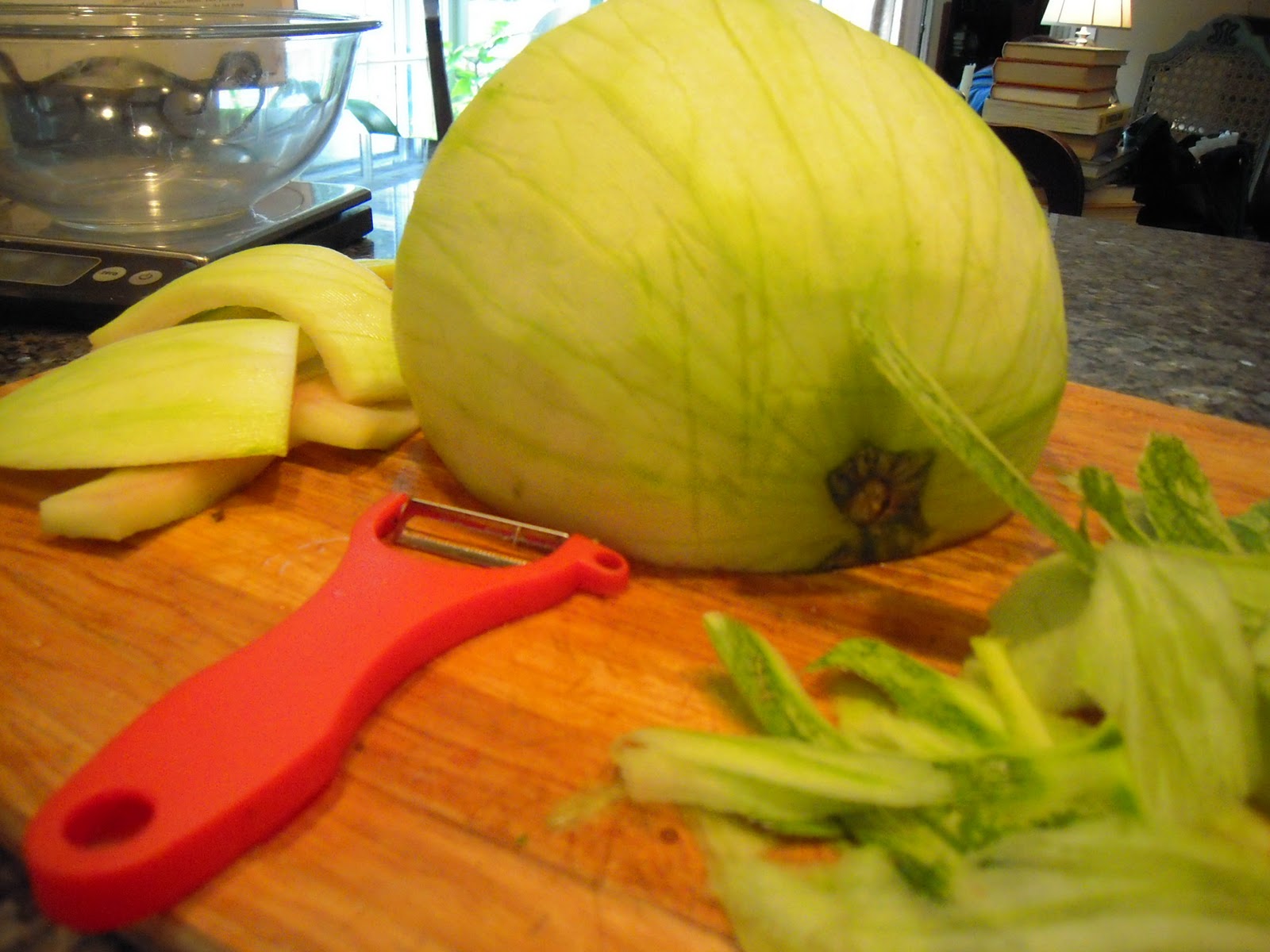
Pickled Watermelon Rind is my absolute favorite pickle to serve with this, as the seasonings reflect the seasonings in the paté, and it also has a bit of sweet to play off the bit of salt in the paté. This recipe, from The Philadelphia Cook Book of Town and Country, by Anna Wetherill Reed, (NY: Bramhall House, 1963,) with sliced lemon and preserved ginger, is fabulous.
Cut off all green and pink from rind of 1 large
watermelon. Weigh prepared rind and soak overnight in brine made with 2T table
salt to every1quart
water.

Drain and cook rind in
fresh water until tender and drain again. For each 2 lbs prepared rind, boil together 4 ½ c
sugar, 2 c
water, 1
lemon, halved lengthwise and thinly sliced, 2 c
vinegar, 1
stick cinnamon, 1 tsp
whole cloves, and 1 tsp
allspice berries, and pour over rind and add ¼ c
preserved (candied) ginger, sliced. Cook about 5 minutes until rind becomes clear and translucent. Pack in clean sterilized jars, fill with syrup and process at once.
(Reed has you use plain preserved ginger and remove it before processing, but I prefer to use sliced candied ginger and mix it in with the rind).
I promise, this is one of the best watermelon rind recipes around, and it is so good with pate!
A last note on paté.
The general consensus is that it doesn’t freeze well, which is true. It looses its soft and smooth texture when frozen. But it can be revived and reinvented into a very nice spread, and you won’t need to waste any of your lovely
paté. Be sure to freeze what you won’t be eating right away, while it is still fresh. When you’re ready to thaw it, do so in the refrigerator. When your
paté has thawed, whir it up, fat and all, in your food processor with a little
cream, or ideally some of that
pork aspic you made, or a little of both.
You can add some fresh
thyme, savory, paprika, and a pinch of salt to perk it up. It’s not the pate you made in the first place, but it ain’t half shabby this way.
And a Confession:
I burned the top of that pate!
And simultaneously undercooked the bottom crust!
Thinking I should get with the program and start testing my pate temperatures with a thermometer, I pulled it too soon, thought it should be a little browner on the top, turned on the broiler, and then got distracted!
So the top got scraped, brushed with egg, and re-browned.
Later when I removed it from the mold I saw that the bottom crust was underdone, so it went back into the oven again, this time bottom side up, and then it was returned to the ramekin for the pouring of the aspic.
A pate revival, but still, be sure your sins will find you out!